Difference between ‘Thermodynamics’ and ‘Heat Transfer’

Thermodynamics is a way to learn the behavior of nature. Heat transfer is one of the characteristics of nature in which heat flows from one object to another object because of temperature differences. Thermodynamics and Heat Transfer both are part of thermal engineering and each one has its own meaning and importance. Both deal with … Read more

Objective questions in mechanical engineering (Thermal Engineering) for competitive exams

This post guides you to give sample objective questions tailored for competitive exams in thermal engineering. In the current engineering scenario, a solid understanding of Thermal Engineering principles is crucial. This blog post aims to provide you with a set of objective questions that align with the basic concepts. Objective questions in Mechanical Engineering 1. … Read more

What are the meaning of a Higher calorific value (HCV) and a lower calorific value (LCV) of a fuel?

Higher and lower calorific value of fuel

Our lives are fundamentally impacted by energy. Understanding the energy composition of various fuels is essential for effective energy usage, whether we’re using it for home heating or car fuel. When it comes to fuels, the terms Higher Calorific Value (HCV) and Lower Calorific Value (LCV) are crucial measures that allow us to assess and … Read more

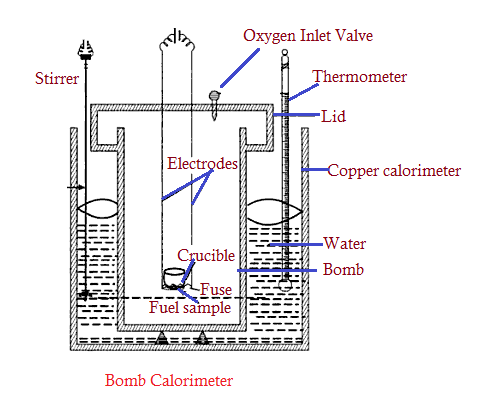
‘Bomb Calorimeter’ for determination of Calorific Value of fuel

construction of a bomb calorimeter

The calorific value (CV) of a fuel is a characteristic of fuel which is defined as the energy liberated per kg of fuel burnt. Fuels are found in three-phase viz. solid, liquid, and gaseous. Junker’s calorimeter is used to measure the CV of gaseous fuels. This article helps you to know the process to determine … Read more

Most important subjects for GATE 2024 Mechanical Engineering

most important subjects for GATE

Most mechanical engineering students preparing for higher studies or jobs ask one common question, Which subjects are the most important subjects in mechanical engineering? The mechanical curriculum or by the way any engineering stream/branch curriculum contains many subjects spanning from the first year to the final year. The first year contains common bridge subjects while … Read more

Mechanical engineering interview: most frequently asked questions

Appearing for the Mechanical engineering interview is a important event for any mechanical engineering graduate. Each and every interview starts with a question from the chairman of the interview. He normally asks the candidate to say a few words about family and educational background. Normally he asks or starts the interview by asking, ‘Tell me … Read more

All you need to know about Redwood Viscometer

redwood viscometer

The nature and analysis of flow depend on the thermophysical properties such as the viscosity of the fluid being considered. There are various methods for the determination of fluid viscosity, namely the capillary tube method, falling sphere method, rotating cylinder method, or Redwood viscometer. Viscosity measurement is important for a wide range of applications in … Read more

Difference between transient heat transfer and steady state heat transfer

transient heat transfer

Understanding heat transfer dynamics is important in engineering, it influences the design and operation of various systems. In this blog post, we’ll delve into two fundamental concepts: steady-state and transient heat transfer. We’ll explore their definitions, mathematical representations, practical applications, and crucial differences, and their significance in engineering design and problem-solving. Whether you’re a student, … Read more

Future trending areas in Mechanical Engineering All you need to know about Renewable Energy Sources