
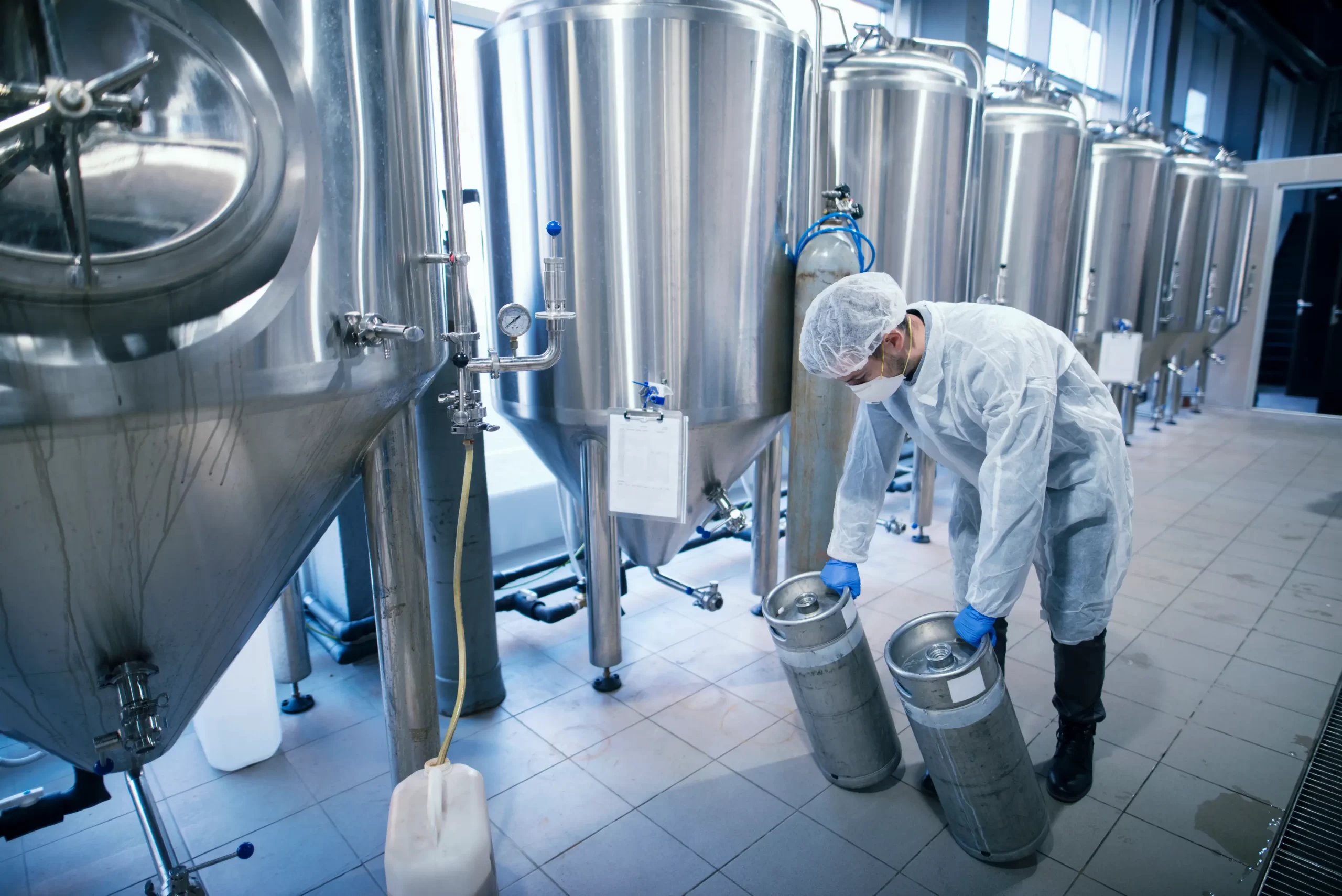
Cryogenic refrigeration systems are mechanical devices that produce and maintain temperatures below 123 K (−150°C), typically using regenerative cycles such as Gifford-McMahon (GM), Stirling, or Pulse Tube technology. Pulse tube refrigerators (PTRs) are increasingly preferred for their lack of moving parts at the cold end, offering high reliability with reduced vibration and maintenance.
Introduction to Cryogenics
If you’ve ever wondered how an MRI machine keeps its superconducting magnets near absolute zero, or how satellites keep infrared sensors cold enough to function in the vacuum of space, the answer is cryogenic refrigeration. This guide breaks down how these systems work, the major technology families in use today, how to evaluate their performance, and where each type fits best — drawn from hands-on research and simulation work on GM-type orifice pulse tube refrigerators.
What Is Cryogenic Refrigeration?
Cryogenic refrigeration refers to any refrigeration process that reaches temperatures in the cryogenic range — generally below 123 K (−150°C), extending down toward 4 K (−269°C) for liquid helium applications. Unlike domestic or industrial refrigeration (which relies on vapor-compression cycles), cryocoolers rely on thermodynamic cycles built around gas compression, expansion, and regenerative heat exchange, usually using helium as the working fluid. The low temperature liquids like liquid nitrogen and other cryogens need insulated vessels to store the liquefied gas (cryogens).
The Three Major Cryocooler Families
1. Gifford-McMahon (GM) Cryocoolers
GM coolers use a displacer driven by a rotary valve to cyclically pressurize and depressurize a cold head, with a separate compressor supplying high-pressure gas. They’re valued for reliability and are common in MRI and cryopump applications, though the moving displacer introduces wear and vibration.
2. Stirling Cryocoolers
Stirling coolers combine compression and expansion in a single closed cycle using a piston and displacer. They achieve higher efficiency per unit size than GM coolers, making them popular in space and defense applications where compactness and power efficiency matter more than lowest achievable temperature.
3. Pulse Tube Refrigerators (PTRs)
PTRs replace the mechanical displacer with a pulse tube — a hollow, moving-part-free component that uses phase relationships between pressure and mass flow to move heat. This is the core research focus at Mechanical Duniya, particularly GM-type orifice pulse tube refrigerators, where the pressure waveform is derived directly from rotary valve geometry rather than assumed as an input — a more physically accurate approach to performance prediction.
[Comparison table placeholder — insert once built: GM vs Stirling vs PTR across temperature range, COP, vibration, maintenance, typical cost, typical applications]
Why Pulse Tube Refrigerators Are Gaining Ground
The absence of moving parts at the cold end means PTRs suffer far less wear, generate less vibration, and require less maintenance than GM or Stirling systems — a major advantage in applications like space telescopes, quantum computing dilution refrigerators, and superconducting electronics, where vibration directly degrades performance.
There are two common configurations:
- Orifice Pulse Tube Refrigerator (OPTR): uses a simple orifice valve to control phase shift between pressure and mass flow — simpler, but with performance limits.
- Double-Inlet Pulse Tube Refrigerator (DIPTR): adds a second flow path bypassing the regenerator, improving phase control and typically outperforming single-orifice designs at the cost of added complexity.
Key Performance Factors
Understanding cryocooler performance comes down to a handful of interacting variables:
- Coefficient of Performance (COP): the ratio of cooling power to input power — this typically decreases as cooling load increases due to increased regenerator and flow losses.
- Regenerator design: material, porosity, and mesh density strongly affect efficiency, especially as target temperatures drop toward the 4 K range where regenerator heat capacity becomes a limiting factor.
- Phase angle control: the relationship between pressure oscillation and mass flow oscillation determines how effectively the system converts input work into cooling — poor phase control is a major source of acoustic power loss.
- DC flow: unwanted steady (non-oscillating) flow within the pulse tube that degrades performance if not properly suppressed by design.
Real-World Applications
- Medical imaging: MRI machines rely on GM cryocoolers to keep superconducting magnets below their critical temperature.
- Space and defense: Stirling and pulse tube coolers cool infrared sensors and detectors in satellites, where reliability and low vibration are mission-critical.
- Quantum computing: pulse tube refrigerators are now standard as the first stage of dilution refrigerators cooling superconducting qubits.
- Industrial gas liquefaction: larger-scale cryogenic systems liquefy nitrogen, oxygen, and natural gas (LNG) for storage and transport.
Explore the Full Cryogenics Q&A Series
This guide covers the fundamentals — for deep dives into specific engineering questions, explore the full Q&A series below:
Fundamentals
- [What is a pulse tube refrigerator and how does it work?]
- [Why does a pulse tube refrigerator have no moving parts at the cold end?]
- [What is the difference between GM-type and Stirling-type cryocoolers?]
- [What is DC flow in a pulse tube refrigerator and why is it harmful?]
- [What is the role of the orifice valve in an orifice pulse tube refrigerator?]
Performance & Diagnostics
- [Why does PTR COP drop as cooling load increases?]
- [What causes temperature instability in a GM-type pulse tube refrigerator?]
- [How does regenerator material affect PTR performance at different temperature ranges?]
- [Why is the phase angle between pressure and mass flow important in PTR design?]
- [What causes acoustic power loss in pulse tube refrigerators?]
Design & Simulation
- [How is the pressure waveform derived from rotary valve geometry in a GM-type PTR?]
- [What are the key design parameters for optimizing an orifice pulse tube refrigerator?]
- [How do you simulate a GM-type pulse tube refrigerator using MATLAB/Python?]
- [What is the effect of regenerator porosity on cryocooler efficiency?]
- [Why do double-inlet pulse tube refrigerators outperform single-orifice designs?]
Applications & Comparisons
- [Why are pulse tube refrigerators preferred over Stirling coolers in space applications?]
- [What temperature range can a GM-type pulse tube refrigerator realistically achieve?]
- [How is a pulse tube refrigerator used in MRI machine cooling?]
- [What is the difference between single-stage and two-stage pulse tube refrigerators?]
- [Why is liquid helium temperature (4K) difficult to reach with pulse tube technology?]
(Replace each bracketed title above with a live hyperlink as you publish each post.)
About This Guide
This guide is written by Dr. Paresh Gujarati, a researcher in cryogenic systems with a doctoral background in GM-type orifice pulse tube refrigerator simulation and experimental validation, published in peer-reviewed cryogenics literature. Mechanical Duniya has been serving mechanical engineering students and professionals since 2012.